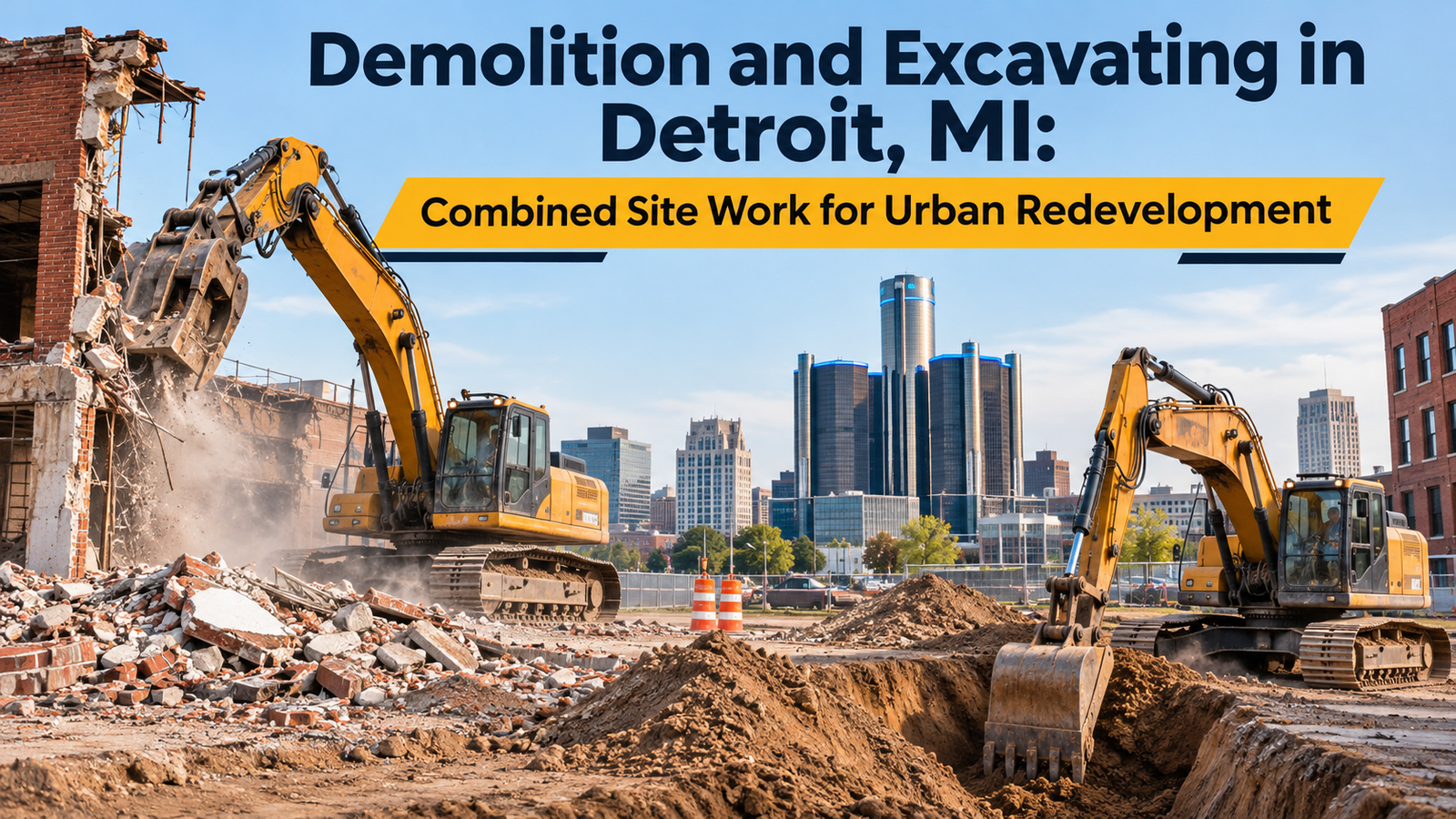
Demolition and excavation are closely linked activities in urban redevelopment demolition clears the structures from a site, and excavation prepares the cleared site for new construction. In Detroit, where decades of building demolition excavating Detroit and land recycling have created thousands of cleared lots alongside occupied blocks, the combination of demolition and excavation services represents the foundational work of turning vacant or blighted properties into buildable sites. Understanding how these two scopes of work interact, and what the specific challenges of Detroit’s urban environment and geology mean for site work, is relevant background for property owners, developers, and community development organizations working in the city.
The Relationship Between Demolition and Excavation
Demolition removes what is above grade: buildings, structures, foundations, and the visible built environment. Excavation removes what is below grade: soil, foundation remnants, buried debris, and in redevelopment contexts, the legacy materials that previous construction left in the ground. On many Detroit redevelopment sites, the full scope of work encompasses both: demolishing the existing structure, removing the foundation, and excavating to the depth needed for the new use whether that is a building foundation, a utility installation, a stormwater management feature, or simply grading the cleared lot to positive drainage away from adjacent properties.
The sequence matters: demolition typically precedes excavation because the structure must be removed before the excavated ground can be safely accessed and worked. However, in complex projects, some excavation work may need to precede portions of the demolition for example, excavating to expose and disconnect utilities before the structure above is demolished. Good project planning coordinates the two scopes to avoid creating situations where one activity blocks or endangers the other.
Detroit’s Urban Geology and Excavation Conditions
Detroit sits on the Michigan Basin, a geological feature characterized by relatively flat-lying sedimentary rock formations beneath a mantle of glacial deposits. The glacial soils tills, outwash sands and gravels, and lacustrine clays deposited by the glacial lakes that preceded Lake Erie and Lake St. Clair are the material that excavation encounters on most Detroit projects. The heavy lacustrine clays from the glacial lake periods are particularly prevalent in the lower-elevation portions of the Detroit metro, and these soils present excavation challenges: they are cohesive and can be excavated without immediate cave-in in stable conditions, but they are weak when wet and can be very difficult to excavate in wet seasons.
The Detroit River and the region’s numerous tributaries have deposited alluvial materials in the river valleys and low-lying areas. Groundwater is relatively shallow in many parts of Detroit the glacial outwash sands and gravels that underlie some neighborhoods are permeable water-bearing formations, and excavations that reach these materials encounter groundwater that must be managed through dewatering. This is a common condition for basement and utility excavations in Detroit.
Buried foundations and debris are a common complication for excavation in Detroit’s older urban neighborhoods. The city’s long history of construction and demolition has left previous foundation systems, cisterns, privy vaults, and other buried structures below many lots. Utility lines from previous construction may also be present without adequate records. Pre-excavation investigation reviewing available records, conducting ground-penetrating radar surveys on larger projects, and maintaining situational awareness during excavation reduces the risk of encountering unexpected buried conditions.
Michigan’s Underground Utility Protection Requirements
Michigan Act 174 (the MISS DIG Underground Facility Damage Prevention and Safety Act) requires all excavators to contact MISS DIG (by calling 811) at least three working days before beginning excavation anywhere in Michigan. MISS DIG notifies member utility operators, which then mark their underground facilities in the excavation area. The marking system uses standard colors: red for electric, yellow for gas and petroleum, orange for communications, blue for water, and green for sewer. In Detroit’s dense urban environment, subsurface utilities are numerous and the consequences of an unmarked utility strike can be severe.
Post-demolition excavation on cleared sites still requires MISS DIG notification the underground utility infrastructure serving the demolished building (water service, sewer lateral, gas service, and electrical conduit) is still present in the ground until it is properly disconnected and abandoned or removed. These services must be identified, their condition assessed, and their fate (abandonment at the main or removal) determined as part of the demolition and excavation scope.
Environmental Considerations in Detroit Redevelopment Excavation
Detroit’s long industrial and commercial history means that many sites in the city have some degree of environmental contamination in their soils petroleum hydrocarbons from underground storage tanks at former gas stations and commercial properties, heavy metals from industrial operations, and the VOCs from dry cleaning and other solvent-using businesses are among the contaminants encountered. The Michigan Department of Environment, Great Lakes, and Energy (EGLE) administers brownfield redevelopment programs and Part 201 (Environmental Remediation) of the Natural Resources and Environmental Protection Act, which governs contaminated site cleanup in Michigan.
When excavation encounters suspected contaminated soil indicated by petroleum odor, discolored soil, or the presence of buried tanks or drums work in that area typically stops pending characterization. Sampling and laboratory analysis determine the contamination type and concentration, which drives decisions about whether material can be managed on-site under a due care plan or must be excavated and disposed of as contaminated soil at a licensed facility. Detroit’s brownfield redevelopment programs through the Detroit Land Bank Authority and the Michigan Strategic Fund can provide resources for environmental assessment and cleanup on qualifying properties.
Foundation Removal and Site Preparation After Demolition
After a structure is demolished in Detroit, the site typically has the foundation system remaining in the ground: a full basement with concrete or block walls, a slab on grade, or a crawl space with perimeter footings. For redevelopment projects, the foundation must typically be removed to allow the new construction’s foundation to be built to current code standards and at the correct elevation. For lots being cleared for open space, community gardens, or future construction, the foundation may be demolished to a specified depth below grade and the remainder filled and graded.
Foundation removal excavation is one of the more equipment-intensive aspects of Detroit demolition site work. Concrete and masonry foundations resist excavation equipment and require hydraulic hammer attachments, concrete crushers, or other breaking equipment to reduce the foundation to manageable pieces for loading and hauling. The concrete debris from foundation removal is typically crushed and recycled as road base or fill aggregate, consistent with Michigan’s construction and demolition debris recycling practices.
Frequently Asked Questions: Demolition Excavating in Detroit, MI
What is the difference between demolition and excavation on a Detroit redevelopment site?
Demolition removes the above-grade structure and the visible built elements from a site. Excavation removes soil and below-grade elements foundations, buried debris, and subgrade material to prepare the cleared site for new construction or other use. On most Detroit redevelopment projects, both scopes are needed: demolish the existing building and then excavate to remove the foundation and prepare the site. Some contractors offer both services under a single contract, which simplifies coordination and responsibility for the transition from demolition to site work.
What is MISS DIG and why does it apply to excavation on a cleared Detroit lot?
MISS DIG (accessed by calling 811) is Michigan’s underground utility notification service under Act 174. It applies to all excavation in Michigan, including on cleared lots. The previously demolished building still has utility infrastructure in the ground water services, sewer laterals, gas lines, and electrical conduit that remains live or at minimum present until properly disconnected and abandoned. Additionally, public utility infrastructure in the adjacent right-of-way and potentially crossing the property is still active. MISS DIG notification at least three working days before excavation is a legal requirement for all excavation, including post-demolition site work.
What happens when contaminated soil is found during excavation in Detroit?
When excavation encounters suspected contamination indicated by odors, discoloration, or the presence of buried tanks the standard practice is to stop excavation in the affected area, collect samples, and have them analyzed by a certified laboratory. The results determine the contamination type and level, which drives regulatory classification and disposal requirements. Under Michigan Part 201, options range from leaving material in place under a risk-based closure plan to excavating and disposing of contaminated soil at a licensed facility. Detroit’s brownfield programs can help fund characterization and cleanup of qualifying sites.
Do buried foundations need to be removed after demolition in Detroit?
Whether a foundation must be removed depends on the future use of the site. For sites being redeveloped with new construction, existing foundations typically must be removed so the new structure’s foundation can be designed and built to current code on a known subgrade. For vacant lots being cleared for open space or future use, some jurisdictions allow partial removal demolishing the foundation to 2 feet below grade and filling rather than full removal. Detroit’s BSEED can advise on the requirements for specific sites. Full removal is generally preferred for redevelopment flexibility.